NYSE:UNH

Post Image
UnitedHealth Slips 0.5% Despite Higher Profitability and Improved Medical Cost Trends

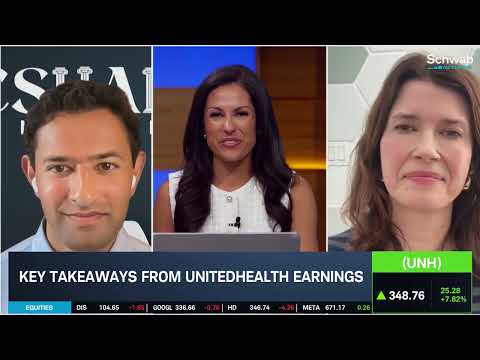
UnitedHealth Group (NYSE: UNH) shares fell about 0.5% even after the company reported stronger third-quarter profitability and improved medical cost performance.

Third-quarter adjusted earnings were $4.69 per share. Revenue came in at $112.7 billion, slightly below the $113.2 billion reported a year earlier, but operating earnings increased sharply to $6.6 billion from $4.3 billion.

A key positive was the medical care ratio, which improved to 88.4% from 89.9% a year ago. UnitedHealth attributed the decline to better medical cost management, benefit design changes, pricing discipline and care delivery improvements. The quarter also benefited from $610 million of favorable prior-period reserve development related to 2026 dates of service.

UnitedHealthcare served 48.3 million consumers and generated $86.3 billion in revenue and $2.8 billion in earnings. Optum reported $66.9 billion in revenue and $3.7 billion in earnings while serving more than 120 million patients and consumers.

Operating efficiency also improved, with the operating cost ratio declining to 12.8% from 13.5% a year earlier. Cash flow from operations totaled $5.1 billion, or 1.2 times net income.

The company updated its full-year 2026 outlook to earnings of at least $19.50 per share and adjusted earnings of at least $20.50 per share.

The modest decline in UnitedHealth shares suggests investors may be focusing on the slight year-over-year revenue contraction and the fact that part of the medical ratio improvement came from favorable reserve development, despite stronger operating earnings and better cost control.
UnitedHealth Group (UNH) Stock Slips Despite Morgan Stanley Raising Price Target

UnitedHealth Group (NYSE: UNH) shares traded modestly lower on Tuesday despite Morgan Stanley raising its price target, reaffirming confidence in the health insurance giant's long-term growth outlook.

Morgan Stanley increased its price target to $468 from $453 while maintaining its Overweight rating, reflecting continued optimism about UnitedHealth's earnings potential despite recent challenges facing the managed care sector.

# Morgan Stanley Remains Bullish

The higher price target suggests Morgan Stanley expects UnitedHealth to continue benefiting from its diversified healthcare business, which includes its market-leading insurance operations and rapidly growing Optum health services segment.

The firm continues to view UnitedHealth as one of the highest-quality companies in the healthcare sector, supported by its scale, cash flow generation, and broad exposure across healthcare services.

# Investors Remain Focused on Industry Headwinds

Despite the positive analyst action, shares traded lower as investors continued to monitor higher medical costs and reimbursement pressures that have weighed on sentiment across the managed care industry in recent months.

While Morgan Stanley's higher valuation reinforces confidence in the company's long-term fundamentals, broader sector concerns continue to influence near-term trading.

# Why UNH Stock Was Lower

Several factors shaped Tuesday's trading:

* Morgan Stanley raised its price target to $468 from $453.
* The firm reiterated its Overweight rating.
* Investors remained cautious about rising medical cost trends and healthcare sector headwinds.
* The positive analyst action was not enough to offset broader market sentiment.

Although UnitedHealth shares edged lower during the session, Morgan Stanley's decision to raise its valuation target reinforces Wall Street's confidence that the company remains well positioned to deliver long-term earnings growth through its diversified healthcare platform.
UnitedHealth Group (NYSE: UNH) rose 1.4% on Monday after TD Cowen reiterated its Buy rating, signaling continued confidence in the healthcare giant despite ongoing challenges facing the managed care sector.

The analyst's positive stance helped support shares as investors looked for signs of stability following a volatile period for health insurers. UnitedHealth remains the largest health insurance provider in the United States and continues to benefit from its diversified business model, which includes both insurance operations and its rapidly growing Optum healthcare services segment.

Investor sentiment toward the sector has been pressured in recent quarters by rising medical costs and concerns about healthcare utilization trends. However, many analysts continue to view UnitedHealth as one of the industry's strongest operators due to its scale, broad market presence, and integrated healthcare platform.

The stock's advance suggests investors welcomed TD Cowen's reaffirmed confidence in the company's long-term outlook. Market participants remain focused on UnitedHealth's ability to manage medical costs, maintain profitability, and leverage the growth of Optum to support earnings expansion.

While challenges remain across the health insurance industry, UnitedHealth's strong competitive position and diversified revenue streams continue to make it a closely watched name among healthcare investors. Monday's gain indicates improving sentiment as investors assess the company's prospects for future growth and operational execution.
UnitedHealth Jumps as Bank of America Upgrades Stock and Analysts Raise Targets

UnitedHealth Group (UNH) shares surged more than 5% after receiving a significant vote of confidence from Wall Street. Bank of America upgraded the healthcare giant from Neutral to Buy while raising its price target from $420 to $450, signaling growing optimism about the company's outlook.

Adding to the positive sentiment, Morgan Stanley also raised its price target from $395 to $453 while maintaining its Overweight rating. The dual analyst actions suggest that concerns surrounding the company may be easing and that valuation has become increasingly attractive following the stock's sharp decline last year. With shares trading around $397, both firms now see meaningful upside potential from current levels.

Today's strong rally reflects investors embracing the more constructive Wall Street outlook. The combination of an analyst upgrade and multiple price target increases suggests sentiment may be turning more favorable for one of the largest healthcare companies in the world after a difficult period for the stock.
UnitedHealthcare announced it is expanding efforts to standardize prior authorization processes, with more than 50% of requests already included in a new industrywide electronic submission framework and a target of over 70% by the end of 2026.

The initiative aims to simplify administrative procedures for providers, reduce delays, and improve patient access to care by standardizing documentation requirements across commercial, Medicare Advantage, and Medicaid plans.

The move is part of broader efforts to modernize prior authorization, including reducing required services, expanding digital tools, and improving transparency, while maintaining clinical safeguards and coverage standards.
UnitedHealth Group reported first-quarter 2026 results showing modest revenue growth and solid profitability, with total revenues rising 2% year-on-year to $111.7 billion.

Earnings reached $6.90 per share, with adjusted earnings of $7.23 per share, supported by operational improvements implemented in recent quarters. Operating earnings totaled $9.0 billion, while the net margin slightly declined to 5.6% from 5.7% a year earlier.

The company generated strong cash flow from operations of $8.9 billion and maintained a debt-to-capital ratio of 42.9%.

Reflecting confidence in its performance, UnitedHealth raised its full-year 2026 outlook, now expecting adjusted earnings of more than $18.25 per share.
UnitedHealthcare has launched “Avery,” a generative AI-powered companion designed to simplify healthcare navigation and personalize member experiences.

The tool provides 24/7 support, helping users manage coverage details, check claims, estimate costs, schedule appointments, and explore care options. Avery adapts to individual needs using personal benefits and interaction data, offering tailored guidance and real-time recommendations.

Currently available to about 6.5 million members, the AI assistant is expected to expand to more than 20 million users across commercial, Medicare, and Medicaid plans by year-end.

The system also enhances customer service by equipping support staff with real-time insights, reducing administrative workload and improving response efficiency. UnitedHealthcare said the rollout is part of a broader strategy to streamline healthcare access, supported by ongoing investments in AI technology.
UnitedHealthcare announced the nationwide expansion of its doula support program to eligible employer-sponsored health plans, aiming to improve maternal and infant health outcomes across the United States.

The service provides non-clinical emotional, physical and educational support throughout pregnancy, childbirth and the postpartum period. Members can access doulas either in person or virtually and may receive coverage for a set number of visits or reimbursement for services, depending on their health plan.

The rollout is being implemented in phases, with broader availability expected during 2026. By January 1, 2027, approximately 7.2 million members could have access to the offering through their employer health plans. UnitedHealthcare said the initiative is part of broader efforts to address maternal health challenges and reduce preventable pregnancy-related complications.
UnitedHealth Group said its pharmacy services unit Optum Rx is using artificial intelligence to reduce costs, detect fraud, and prevent medication errors in pharmacies.

The AI system analyzes prescription claims in real time to identify potential fraud, waste, or abuse—such as duplicate therapies, unusual drug quantities, or billing irregularities. When suspicious patterns are detected, human auditors review the case and contact pharmacies to verify prescriptions or correct issues before medications are dispensed.

According to the company, AI-enabled analytics helped reduce low-value retrospective audits by 35%, allowing auditors to focus on higher-risk cases. Advanced pharmacy audit programs recover an average of about $2 million for clients while helping prevent medication errors that could harm patients.

Optum Rx supports nearly 61 million members and uses AI alongside human oversight to improve pharmacy safety, reduce unnecessary spending, and streamline the auditing process across the U.S. healthcare system.
UnitedHealthcare expands support for maternal and family health care

UnitedHealth Group highlighted new efforts to improve access to affordable health care for mothers and their families, citing rising maternal and infant mortality rates in the United States. The company said gaps in care remain significant, with a reported 36% increase in maternal mortality underscoring the need for expanded support.

Through UnitedHealthcare plans, members can access services such as Maven, a virtual clinic platform offering 24/7 pregnancy, postpartum and newborn support, including virtual appointments, educational resources and care coordination. The company also pointed to community-level investments aimed at improving outcomes for women and children.

In 2025, the United Health Foundation committed $7 million in grants to expand maternal and infant health care access in Georgia, Michigan, New Mexico and Wisconsin. UnitedHealthcare additionally supports the Mom & Baby Mobile Health Center in Washington, D.C., operated by March of Dimes, which provides wellness exams, ultrasounds and infant care services.

UnitedHealth Group said these initiatives are part of broader efforts to strengthen the health system and improve care delivery for women and families nationwide.

Source: UnitedHealth
Video Thumbnail
05-04-26WS News
Video Thumbnail
05-03-26WS News
Video Thumbnail
05-01-26The Investor
Video Thumbnail
04-29-26Global Finance News
Video Thumbnail
04-21-26European Investor