Germany

Eurozone Inflation Eases Further in June, Supporting ECB Policy Outlook

Eurozone inflation continued to moderate in June, reinforcing expectations that the European Central Bank will have greater flexibility to continue easing monetary policy if disinflation remains on track.

Headline consumer inflation came in at 2.8% year over year, matching market expectations and slowing from 3.2% in May. Core inflation, which excludes volatile food and energy prices, also met forecasts at 2.4%, down from 2.6% in the previous month.
Germany’s Trade Surplus Widens Sharply in May, Beating Expectations

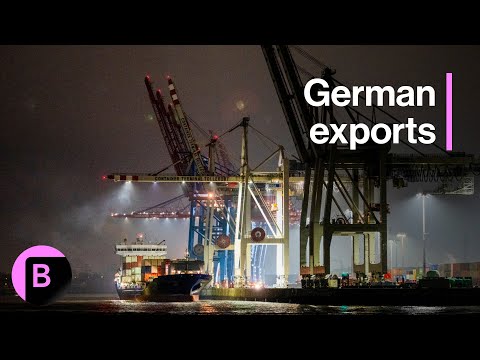
Germany posted a much stronger-than-expected trade surplus in May, underscoring the resilience of Europe’s largest export-driven economy despite ongoing global economic uncertainty.

Germany’s trade balance recorded a surplus of €19.1 billion in May, significantly exceeding economists’ expectations of €14.9 billion. The result also improved markedly from April’s €14.7 billion surplus, reflecting stronger external demand and a favorable trade environment.
German Factory Orders Rebound More Than Expected in May

Germany’s industrial sector showed signs of improvement in May as factory orders rebounded more strongly than expected, pointing to a gradual stabilization in Europe’s largest economy.

German factory orders increased 1.9% month-over-month in May, beating economists’ expectations of a 1.1% rise and reversing April’s revised 3.2% decline.
Eurozone Services PMI Sends Mixed Signals as Germany Improves, France Remains Weak

The latest HCOB Services PMI data painted a mixed picture for the eurozone economy in June, with Germany showing signs of improvement, Italy returning to modest expansion, while France remained in contraction.

Germany’s HCOB Services PMI rose to 48.6 in June from 48.1 in May, comfortably beating economists’ expectations of 46.8. Although the index remained below the 50-point threshold that separates expansion from contraction, the stronger-than-expected reading suggests the downturn in Germany’s services sector is easing.

Italy also showed encouraging signs, with its Services PMI rising to 50.2 from 49.4. While the figure came in just below the consensus estimate of 50.3, it moved back above the 50 mark, indicating a return to modest expansion after contracting in the previous month.

France, however, continued to lag behind its eurozone peers. The country’s Services PMI improved to 46.8 from 44.3 but missed expectations of 47.4, remaining firmly in contraction territory.
Eurozone Inflation Cools More Than Expected in June

Inflation across the eurozone eased more than expected in June, reinforcing signs that price pressures continue to moderate and strengthening expectations for a more accommodative monetary policy outlook.

The annual Consumer Price Index (CPI) slowed to 2.8%, below economists' expectations of 3.0% and down from 3.2% in May.

Core inflation, which excludes volatile food and energy prices, also declined to 2.4% from 2.6% in the previous month, coming in below the consensus forecast of 2.5%.
Germany's Manufacturing Sector Returns to Growth in June

Germany's manufacturing sector returned to expansion in June, with the HCOB Germany Manufacturing PMI rising to 50.3, slightly above market expectations of 50.0 and improving from 50.1 in May.
German Inflation Slows More Than Expected in June

Germany's inflation cooled more than expected in June, reinforcing signs that price pressures continue to ease in Europe's largest economy.

Consumer prices fell 0.3% month over month, compared with expectations for unchanged prices. The decline followed a 0.2% decrease in May, marking a sharper-than-expected slowdown in monthly inflation.

On an annual basis, Germany's Consumer Price Index (CPI) rose 2.3%, below economists' expectations of 2.6% and down from 2.6% in the previous month.
Germany's June Ifo survey showed improving confidence among businesses, driven by a stronger assessment of current conditions, although expectations for the future remained cautious.

The Ifo Current Assessment Index rose to 87.0 from 86.1 in May, beating forecasts of 86.0. The improvement suggests German companies are seeing better business conditions in the present, consistent with recent signs that the country's manufacturing sector has stabilized after a prolonged downturn.

Meanwhile, the Ifo Business Expectations Index increased slightly to 84.1 from 83.9 but missed expectations of 85.0. While businesses became marginally more optimistic about the months ahead, confidence remains relatively subdued, reflecting ongoing concerns about economic growth, global trade conditions, and domestic demand.
Germany's June PMI data showed a slight deterioration in business activity, with weakness in the services sector offsetting stability in manufacturing.

The HCOB Germany Manufacturing PMI edged down to 50.0 from 50.1 in May, missing expectations of 50.3. While the reading remains at the threshold between expansion and contraction, it suggests industrial activity has largely stabilized after a prolonged downturn but is struggling to gain meaningful momentum.

More concerning was the services sector, where the HCOB Germany Services PMI fell to 46.8 from 48.1 in May, well below the 49.0 consensus forecast. The reading signals an accelerating contraction in Germany's largest economic sector and points to softer domestic demand.
German Producer Prices Rise Less Than Expected in May

German producer prices increased 0.3% month-over-month in May, falling short of economists' expectations for a 0.7% increase and slowing significantly from April's 1.2% gain.
Video Thumbnail
01-27-26European Investor
Video Thumbnail
11-21-25WS News
Video Thumbnail
07-25-25WS Investor
Video Thumbnail
07-21-25WS News
Video Thumbnail
06-10-25The Investor