NYSE:MRK

Merck’s Tulisokibart Meets Key Endpoints in Phase 2b Hidradenitis Suppurativa Study

Merck reported positive Phase 2b results for tulisokibart in patients with moderate to severe hidradenitis suppurativa, marking what the company described as the first positive Phase 2 data for an anti-TL1A monoclonal antibody in dermatology.

The study met its primary endpoint at week 16. HiSCR50 was achieved by 72% of patients receiving the high-dose regimen and 64% of those receiving the medium dose, compared with 35% for placebo. The low-dose group showed a 52% response rate in an exploratory analysis.

Key secondary measures also favored tulisokibart. HiSCR75 was reached by 41% of high-dose and 40% of medium-dose patients versus 15% with placebo, while quality-of-life scores also improved numerically in the higher-dose groups.

Safety was broadly comparable with placebo. Serious adverse events were infrequent, and no serious or opportunistic infections were reported.

Merck said the data will support advancement of tulisokibart into Phase 3 development for hidradenitis suppurativa. The drug is also being studied across several other immune-mediated inflammatory diseases, including ulcerative colitis, Crohn’s disease, rheumatoid arthritis and psoriatic arthritis.
Merck Licenses SciBrunch’s KRAS G12D Cancer Drug Candidate in Deal Worth Up to $2.13 Billion

Merck has entered into an exclusive global licensing agreement with SciBrunch Therapeutics for SPR2015, a preclinical oral KRAS G12D (ON) inhibitor targeting one of the most common cancer-driving mutations.

Under the agreement, Merck gains worldwide rights to develop, manufacture and commercialize SPR2015. SciBrunch will receive $400 million upfront and could earn additional development, commercialization and other milestone payments, bringing the total potential value of the deal to $2.13 billion.

SPR2015 is designed to selectively inhibit KRAS G12D, a mutation found across several major cancers, including pancreatic, colorectal and lung tumors. Preclinical data presented at the 2026 AACR Annual Meeting showed nanomolar antiproliferative activity in KRAS G12D-mutant cell lines and antitumor activity across multiple xenograft models.

The deal expands Merck’s precision oncology pipeline and gives the company another targeted approach beyond its established immuno-oncology franchise. Merck said the asset complements its growing portfolio of precision-targeted cancer candidates.

Merck will record a $400 million pre-tax charge related to the transaction in the third quarter of 2026, equal to about $0.13 per share on both a GAAP and non-GAAP basis.
FDA Updates Merck’s WINREVAIR Label With HYPERION Pulmonary Hypertension Data

Merck said the U.S. Food and Drug Administration approved an update to the label for WINREVAIR to include efficacy and safety data from the Phase 3 HYPERION trial in adults recently diagnosed with pulmonary arterial hypertension.

HYPERION enrolled patients diagnosed within the previous 12 months who were at intermediate to high risk of disease progression. Adding WINREVAIR to background therapy reduced the risk of clinical worsening events by 76% compared with placebo, with a hazard ratio of 0.24. A first clinical worsening event occurred in 10.6% of WINREVAIR-treated patients versus 36.9% of those receiving placebo.

The updated label provides additional evidence for using WINREVAIR earlier in the treatment pathway, rather than only later in the disease course. Most patients in HYPERION were already receiving double or triple background therapy, and the treatment effect was consistent across prespecified subgroups.

The FDA update also adds safety information from HYPERION. The most common adverse reactions included epistaxis, telangiectasia and increased hemoglobin, while treatment discontinuation due to adverse events occurred in 3% of WINREVAIR patients.

WINREVAIR is already approved for adults with pulmonary arterial hypertension to improve exercise capacity and functional class and reduce the risk of clinical worsening events. The new label strengthens Merck’s case for broader and earlier use of the drug in PAH care.
Merck’s KEYTRUDA QLEX Approved in Japan for All KEYTRUDA Indications

Merck said Japan’s Ministry of Health, Labor and Welfare approved KEYTRUDA QLEX for subcutaneous administration across all indications already approved in the country for intravenous KEYTRUDA.

In Japan, the product will be marketed under the planned name KEYJECT. It can be administered by a healthcare provider in about one minute every three weeks or two minutes every six weeks, making it the first and only subcutaneous immune checkpoint inhibitor available in Japan with administration as short as one minute.

The approval was supported by the Phase 3 MK-3475A-D77 study comparing subcutaneous KEYJECT with intravenous KEYTRUDA, both given every six weeks with chemotherapy in previously untreated metastatic non-small cell lung cancer. The study showed comparable pembrolizumab exposure, while response rates were 45% with KEYJECT plus chemotherapy and 42% with KEYTRUDA plus chemotherapy. No notable differences in progression-free or overall survival were observed.

Merck said the subcutaneous formulation could give patients and healthcare providers greater flexibility by allowing treatment in settings ranging from infusion centers to physician offices and community clinics.

KEYTRUDA QLEX is already approved in the U.S. for the same solid-tumor indications as KEYTRUDA, while subcutaneous pembrolizumab was approved in Europe in 2025.
Merck Wins Positive EU CHMP Opinion for KEYTRUDA-Padcev Bladder Cancer Regimen

Merck said the European Medicines Agency’s Committee for Medicinal Products for Human Use issued a positive opinion recommending approval of KEYTRUDA plus Padcev as perioperative treatment for adults with resectable muscle-invasive bladder cancer.

The recommendation covers use before surgery as neoadjuvant therapy and continued treatment after radical cystectomy as adjuvant therapy. A European Commission decision is expected by the fourth quarter of 2026. If approved, the combination would become the first PD-1 inhibitor plus antibody-drug conjugate regimen in the EU for patients with muscle-invasive bladder cancer regardless of cisplatin eligibility.

The CHMP opinion is based on the Phase 3 KEYNOTE-B15 trial. In cisplatin-eligible patients, KEYTRUDA plus Padcev reduced the risk of an event-free survival event by 47% versus neoadjuvant chemotherapy and surgery. The regimen also reduced the risk of death by 35% and produced a pathologic complete response rate of 55.8%, compared with 32.5% in the control group.

The combination is already approved in the U.S. for muscle-invasive bladder cancer regardless of cisplatin eligibility, while the EU previously approved it for cisplatin-ineligible patients.

The latest recommendation could broaden Merck’s position in earlier-stage bladder cancer and further expand KEYTRUDA’s role beyond advanced disease.
Merck Stock Rises 2.7% as Argus and Wolfe Research Raise Price Targets

Merck & Co. (NYSE: MRK) shares rose about 2.7% on Tuesday as two Wall Street firms raised their price targets on the pharmaceutical company while maintaining bullish ratings.

Argus analyst Jasper Hellweg raised the firm's price target on Merck to $170 from $145 while maintaining a Buy rating. Wolfe Research analyst Alexandria Hammond was even more bullish, increasing the firm's target to $180 from $155 and maintaining an Outperform rating.

With Merck trading around $154.73, the new targets imply upside of approximately 10% and 16%, respectively.

## Why the Rating Reports Are Positive for Merck

The simultaneous target increases from two firms signal improving expectations for Merck's earnings and valuation.

Merck remains one of the world's largest pharmaceutical companies, with a strong oncology franchise led by Keytruda and a broader pipeline designed to diversify growth over the longer term. The company's position in oncology and continued investment in new medicines remain central to its growth outlook.

Tuesday's 2.7% gain appears to reflect the positive analyst sentiment, with both firms seeing additional upside even after the stock's recent performance.
Moderna Soars 100%, Merck Jumps 10% After Landmark Phase 3 Cancer Vaccine Results

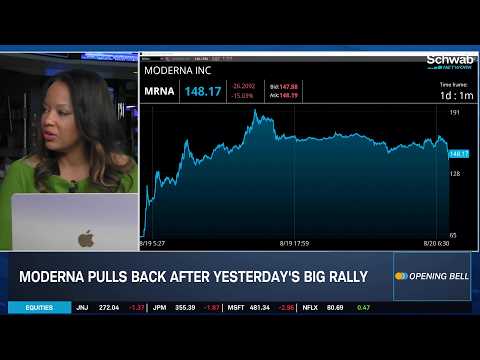
Moderna shares surged about 100% on Wednesday, while Merck climbed roughly 10%, after the companies announced positive Phase 3 results for their personalized mRNA cancer therapy intismeran autogene in combination with Merck’s blockbuster immunotherapy KEYTRUDA.

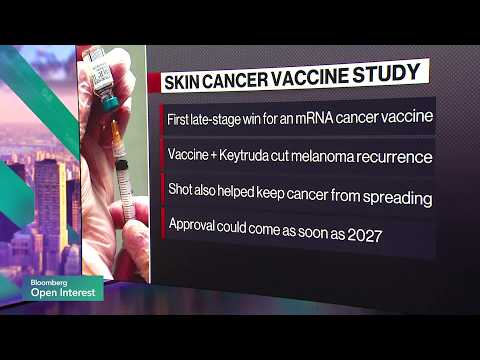
The INTerpath-001 trial met both its primary endpoint of recurrence-free survival and a key secondary endpoint of distant metastasis-free survival in patients with completely resected Stage IIB-IV melanoma. The combination produced statistically significant and clinically meaningful improvements compared with KEYTRUDA alone.

A Major Milestone for Moderna’s mRNA Platform

The results are particularly significant for Moderna because they represent the first positive Phase 3 readout for an individualized neoantigen therapy and the first positive Phase 3 study for an mRNA-based cancer therapy. The treatment is individually manufactured using mutations identified from each patient's tumor, with the resulting mRNA therapy designed to train the immune system to recognize and attack cancer cells.

That breakthrough likely explains the much larger reaction in Moderna shares. The results potentially validate the use of Moderna's mRNA technology beyond infectious-disease vaccines and provide important clinical validation for its oncology pipeline.

The companies also said no new safety signals were observed. They plan to present detailed data at an upcoming international medical meeting and share the results with regulatory authorities, opening the path toward potential filing submissions.

Merck Gains as KEYTRUDA Franchise Could Expand

For Merck, the results strengthen the long-term position of KEYTRUDA, its cornerstone cancer therapy. The combination is the first regimen to demonstrate statistically significant and clinically meaningful improvements in both recurrence-free and distant metastasis-free survival compared with KEYTRUDA alone in this adjuvant melanoma population.

Earlier Phase 2b data had already provided encouraging evidence: at five-year follow-up, the combination showed a 49% reduction in the risk of recurrence or death and a 59% reduction in the risk of distant metastasis or death compared with KEYTRUDA alone.

The companies are now studying intismeran across a broader oncology program encompassing nine Phase 2 and Phase 3 trials, including melanoma, non-small cell lung cancer, bladder cancer and renal cell carcinoma.

With Moderna up around 100% and Merck gaining about 10%, the market reaction reflects more than a single successful melanoma trial. Investors appear to be pricing in the possibility that personalized mRNA cancer therapies could become a new treatment platform, with potentially much broader applications if ongoing trials in other tumor types are successful.
Merck Stock Edges Higher as Strong Product Growth Offsets Acquisition Charge

Merck (NYSE: MRK) shares rose 0.54% on Tuesday after the pharmaceutical company reported solid second-quarter revenue growth, raised its full-year sales outlook and highlighted multiple regulatory and clinical milestones, despite posting a quarterly loss due to a one-time acquisition-related charge.

Second-quarter worldwide sales increased 5% year over year to $16.6 billion, driven by continued strength in oncology, animal health and recently launched products. The company reported a GAAP loss per share of $0.54 and a non-GAAP loss per share of $0.13, both primarily reflecting a $2.31 per share charge related to the acquisition of Terns Pharmaceuticals.

Oncology and New Product Launches Drive Revenue Growth

Merck's flagship cancer franchise remained the company's largest growth engine.

KEYTRUDA and the newly launched KEYTRUDA QLEX generated combined sales of $8.4 billion, up 5% from a year earlier, with KEYTRUDA QLEX contributing $463 million during its initial launch period.

WINREVAIR continued its rapid commercial expansion, with sales jumping 75% year over year to $588 million, while Animal Health revenue increased 8% to $1.8 billion, providing additional support for overall growth.

Pipeline Momentum and Higher Guidance

Beyond commercial performance, Merck reported several important pipeline achievements during the quarter.

The FDA approved LIPFENDRA, the first once-daily oral PCSK9 inhibitor for lowering LDL cholesterol, while the company also announced positive clinical data for its oncology and HIV programs, including a Phase 3 study evaluating a once-weekly oral HIV treatment developed with Gilead.

Reflecting continued business momentum, Merck narrowed and raised its full-year 2026 revenue guidance to between $66.3 billion and $67.3 billion. The company now expects non-GAAP EPS of $2.66 to $2.76, including the financial impact of the Terns acquisition.

What to Watch

Despite the acquisition-related accounting charge, investors appeared encouraged by Merck's underlying operating performance, growing contribution from recently launched medicines and continued pipeline progress. Going forward, markets will monitor the commercial rollout of KEYTRUDA QLEX and LIPFENDRA, continued growth of WINREVAIR, and additional regulatory and clinical milestones expected across Merck's expanding pipeline.
Merck (MRK) Stock Slips Despite Scotiabank Raising Price Target

Merck (NYSE: MRK) shares traded modestly lower on Tuesday despite receiving a higher price target from Scotiabank, as investors remained cautious toward the pharmaceutical giant.

Scotiabank raised its price target to $155 from $136 while maintaining its Sector Outperform rating, signaling continued confidence in Merck's long-term growth prospects despite the stock's recent weakness.

# Scotiabank Sees Greater Upside

The higher price target reflects Scotiabank's positive outlook for Merck's diversified pharmaceutical portfolio and its ability to deliver long-term earnings growth.

The firm remains optimistic about Merck's pipeline, oncology franchise, and ongoing efforts to diversify revenue sources ahead of future patent expirations for key products.

# Long-Term Fundamentals Remain Intact

Merck continues to invest heavily in expanding its product portfolio through internal research and strategic acquisitions while advancing multiple late-stage pipeline candidates.

Analysts expect new product launches and pipeline development to play an increasingly important role in supporting future revenue growth as the company prepares for the eventual loss of exclusivity on some of its blockbuster therapies.

# Why MRK Stock Was Lower

Although Scotiabank raised its valuation target, the positive analyst action was not enough to offset broader selling pressure in the stock.

Investors appeared to remain focused on near-term industry challenges and long-term patent expiration concerns rather than the improved valuation.

Still, Scotiabank's decision to raise its price target while maintaining a Sector Outperform rating reinforces Wall Street's confidence in Merck's long-term earnings potential despite Tuesday's modest decline.
Merck & Co., Inc. reported fourth-quarter and full-year 2025 results showing resilient performance driven by oncology and animal health, while highlighting significant progress across its late-stage pipeline.

Fourth-quarter worldwide sales rose 5% to $16.4 billion, with GAAP EPS of $1.19 and non-GAAP EPS of $2.04. For full-year 2025, Merck generated $65.0 billion in worldwide sales, up 1% year over year, supported by 7% growth in KEYTRUDA/KEYTRUDA QLEX sales to $31.7 billion, $1.4 billion in WINREVAIR sales, and strong Animal Health growth of 8%. These gains were partly offset by a sharp decline in GARDASIL/GARDASIL 9 sales.

During 2025, Merck reported positive results from 18 Phase 3 trials, expanded its pipeline through acquisitions and licensing deals, and received FDA National Priority Vouchers for key late-stage assets. Looking ahead, the company expects 2026 worldwide sales of $65.5–$67.0 billion and non-GAAP EPS of $5.00–$5.15, reflecting a one-time charge related to the Cidara Therapeutics acquisition.

Source: Merck & Co., Inc. press release
Video Thumbnail
10-26-26Global Finance News
Video Thumbnail
09-10-26WS News
Video Thumbnail
08-20-26WS Investor
Video Thumbnail
08-19-26WS News
Video Thumbnail
08-04-26European Investor