NASDAQ:MRNA

Moderna Stock Surges 14% After Wolfe Research Upgrade

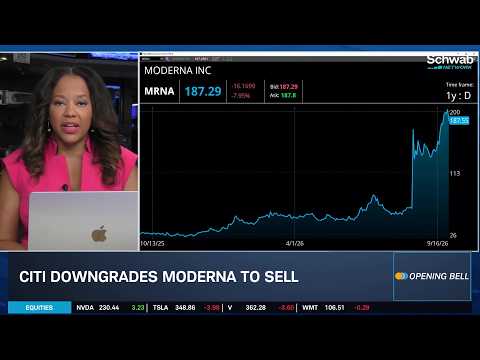
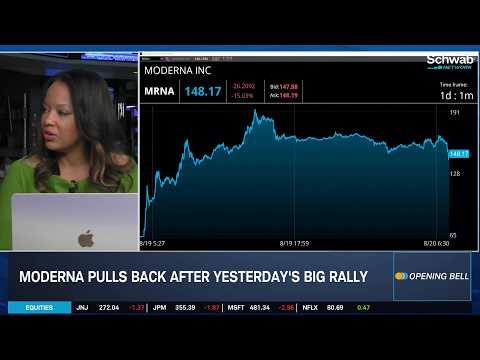
Moderna (NASDAQ: MRNA) shares surged about 14.1% on Tuesday after Wolfe Research upgraded the biotechnology company to Peer Perform from Underperform, improving Wall Street sentiment toward the stock.

Analyst Alexandria Hammond's upgrade removes Wolfe Research's bearish rating on Moderna and signals a more balanced assessment of the company's risk-reward profile.

Why Is Moderna Stock Rising?

The upgrade appears to be an important catalyst for Tuesday's sharp move. A shift from Underperform to Peer Perform suggests Wolfe Research no longer expects Moderna to materially lag comparable biotechnology stocks.

Investor attention is also increasingly focused on Moderna's pipeline beyond COVID-19 vaccines, particularly its cancer vaccine program. The company is developing an individualized neoantigen therapy, intismeran autogene (mRNA-4157/V940), with Merck's Keytruda. The program represents one of Moderna's most important opportunities to demonstrate that its mRNA technology can expand successfully into oncology.

Positive progress in cancer vaccines could significantly broaden Moderna's long-term growth profile beyond respiratory vaccines and remains an important component of the investment case surrounding the company.

## Sentiment Improves, but Rating Remains Cautious

The Peer Perform rating is not equivalent to a Buy or Outperform recommendation. Instead, it indicates that Wolfe Research has become less bearish on Moderna.

Still, the 14% rally suggests investors are responding strongly to the removal of the Underperform rating, while Moderna's cancer vaccine opportunity and broader mRNA pipeline continue to provide potentially significant long-term catalysts.
Moderna Soars 100%, Merck Jumps 10% After Landmark Phase 3 Cancer Vaccine Results

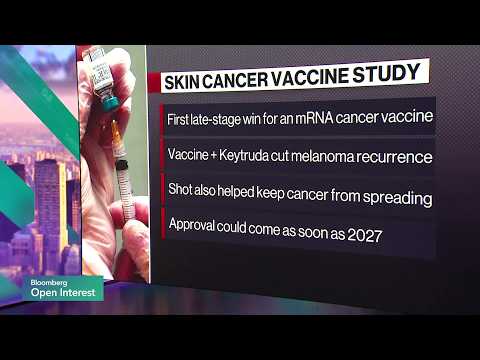
Moderna shares surged about 100% on Wednesday, while Merck climbed roughly 10%, after the companies announced positive Phase 3 results for their personalized mRNA cancer therapy intismeran autogene in combination with Merck’s blockbuster immunotherapy KEYTRUDA.

The INTerpath-001 trial met both its primary endpoint of recurrence-free survival and a key secondary endpoint of distant metastasis-free survival in patients with completely resected Stage IIB-IV melanoma. The combination produced statistically significant and clinically meaningful improvements compared with KEYTRUDA alone.

A Major Milestone for Moderna’s mRNA Platform

The results are particularly significant for Moderna because they represent the first positive Phase 3 readout for an individualized neoantigen therapy and the first positive Phase 3 study for an mRNA-based cancer therapy. The treatment is individually manufactured using mutations identified from each patient's tumor, with the resulting mRNA therapy designed to train the immune system to recognize and attack cancer cells.

That breakthrough likely explains the much larger reaction in Moderna shares. The results potentially validate the use of Moderna's mRNA technology beyond infectious-disease vaccines and provide important clinical validation for its oncology pipeline.

The companies also said no new safety signals were observed. They plan to present detailed data at an upcoming international medical meeting and share the results with regulatory authorities, opening the path toward potential filing submissions.

Merck Gains as KEYTRUDA Franchise Could Expand

For Merck, the results strengthen the long-term position of KEYTRUDA, its cornerstone cancer therapy. The combination is the first regimen to demonstrate statistically significant and clinically meaningful improvements in both recurrence-free and distant metastasis-free survival compared with KEYTRUDA alone in this adjuvant melanoma population.

Earlier Phase 2b data had already provided encouraging evidence: at five-year follow-up, the combination showed a 49% reduction in the risk of recurrence or death and a 59% reduction in the risk of distant metastasis or death compared with KEYTRUDA alone.

The companies are now studying intismeran across a broader oncology program encompassing nine Phase 2 and Phase 3 trials, including melanoma, non-small cell lung cancer, bladder cancer and renal cell carcinoma.

With Moderna up around 100% and Merck gaining about 10%, the market reaction reflects more than a single successful melanoma trial. Investors appear to be pricing in the possibility that personalized mRNA cancer therapies could become a new treatment platform, with potentially much broader applications if ongoing trials in other tumor types are successful.
BioNTech and Moderna: Two mRNA Giants Chart Different Paths as COVID Revenue Fades

May 6, 2026 · Earnings Analysis

The two companies that changed the world with their mRNA COVID-19 vaccines are now deep into a painful reinvention. BioNTech and Moderna both reported first quarter 2026 results within days of each other, and while the headline numbers tell a familiar story of declining vaccine revenues and widening losses, a closer look reveals two very different bets on what comes next.

BioNTech posted Q1 revenues of €118.1 million, down from €182.8 million a year ago, with net loss widening to €531.9 million. Moderna reported $389 million in revenue, up significantly from the prior year but heavily supported by international government deliveries. Moderna's net loss of $1.3 billion was inflated by a $0.9 billion one-time litigation charge, making its underlying trajectory somewhat less alarming than the headline implies. BioNTech ended the quarter with €16.8 billion in cash while Moderna held $7.5 billion.

Where the two companies diverge most sharply is strategy. BioNTech has made oncology its singular focus, pouring resources into pumitamig, gotistobart, and a growing antibody-drug conjugate portfolio, with six late-stage data readouts expected in 2026. Moderna is playing a broader game, advancing infectious disease vaccines including the world's first approved flu plus COVID combination product, while also pursuing oncology and rare disease therapeutics. Its personalized cancer vaccine intismeran, developed with Merck, will present five-year melanoma data at ASCO in June.

BioNTech is also navigating a manufacturing restructuring affecting 1,860 jobs and the planned departure of its co-founders by end of 2026. Moderna, by contrast, is cutting costs aggressively, with R&D spending down 24% year-over-year.

Both are burning cash to fund their futures. BioNTech is going deep and narrow on cancer. Moderna is going wide across multiple disease areas. Which approach pays off will likely become clearer before the year is out.
Moderna Shares Fall 3.4% as Earnings Highlight Losses Despite Pipeline Progress

Shares of Moderna, Inc. declined 3.44% to $44.36 on today, as investors reacted to the company’s first-quarter 2026 earnings, which revealed significant losses driven by one-time charges despite improving revenue trends and pipeline developments.

The biotech firm reported quarterly revenue of $389 million, a sharp increase compared to the prior year, largely supported by higher COVID-19 vaccine sales in international markets. Approximately 80% of total revenue came from outside the United States, reflecting the company’s growing global footprint.

However, profitability remained under pressure. Moderna posted a GAAP net loss of $1.3 billion, with a loss per share of $3.40. A major factor behind the loss was a $0.9 billion non-recurring litigation settlement charge, which significantly weighed on earnings during the quarter.

Despite the headline loss, underlying cost discipline showed improvement. Research and development expenses declined 24% year-over-year, while selling, general and administrative expenses fell 18%, indicating ongoing efforts to streamline operations following the pandemic-driven peak period.

On the strategic front, Moderna continued to advance its pipeline. The company secured key regulatory approvals in Europe, including for its flu and COVID combination vaccine, and initiated a Phase 3 trial for a lung cancer treatment. These developments underscore its transition toward a broader portfolio beyond COVID vaccines.

CEO Stéphane Bancel emphasized confidence in returning to revenue growth in 2026, supported by upcoming product launches and continued clinical progress across multiple therapeutic areas.

Looking ahead, Moderna reiterated its expectation of up to 10% revenue growth for full-year 2026, alongside plans to reduce operating expenses excluding the one-time litigation impact. The company also projected year-end cash and investments between $4.5 billion and $5.0 billion, maintaining a solid liquidity position.

Overall, while revenue growth and pipeline momentum provided some positive signals, the substantial quarterly loss and ongoing transition period appear to have weighed on investor sentiment, pushing the stock lower following the earnings release.
Recordati and Moderna Partner on mRNA Therapy for Propionic Acidemia

Recordati Industria Chimica e Farmaceutica has entered into a global collaboration and license agreement with Moderna to develop and commercialize mRNA-3927, an investigational therapy for propionic acidemia (PA), a rare inherited metabolic disorder.

Under the agreement, Moderna will continue to lead the clinical development of mRNA-3927, while Recordati will assume responsibility for global commercialization if the therapy receives regulatory approval. The collaboration brings together Moderna’s expertise in mRNA-based therapies and Recordati’s established global rare disease commercial infrastructure.

mRNA-3927 is designed to restore the activity of the propionyl-CoA carboxylase (PCC) enzyme, which is deficient in patients with propionic acidemia. The condition leads to the accumulation of toxic metabolites and can result in recurrent life-threatening metabolic decompensation events, as well as neurological and cardiac complications. Currently, no approved therapies directly target the underlying cause of the disease, and treatment options are largely symptomatic, sometimes including liver transplantation.

Interim clinical data published in Nature showed early signs of clinical improvement. The therapy is currently being evaluated in a potential registrational study aimed at reducing metabolic decompensation events, with patient enrollment completed and a data readout expected by the end of 2026.

Financial terms of the agreement include a $50 million upfront payment from Recordati to Moderna, along with up to $110 million in near-term development and regulatory milestones. Moderna is also eligible for additional commercial and sales milestones, as well as tiered royalties on annual net sales. Recordati indicated that it does not expect a significant EBITDA impact prior to a potential launch. The transaction remains subject to customary closing conditions, including U.S. antitrust clearance.

Propionic acidemia affects approximately 1 in 100,000 to 150,000 individuals worldwide and is caused by pathogenic variants in the PCCA or PCCB genes, resulting in PCC deficiency.
Moderna said it expects 2025 revenue of about $1.9 billion on an unaudited basis, roughly $100 million above the midpoint of the range it discussed on its third-quarter 2025 earnings call, as the company provided business and pipeline updates at the 44th Annual J.P. Morgan Healthcare Conference. Moderna also said it improved its expected 2025 GAAP operating expenses by $200 million versus its prior outlook, and raised its projected year-end 2025 cash balance to about $8.1 billion, including a $0.6 billion draw from its recently announced $1.5 billion term loan facility.

Looking ahead, Moderna reiterated its plan for up to 10% revenue growth in 2026 alongside further GAAP operating expense reductions, with 2026 GAAP operating expenses expected to be about $4.9 billion. The company also pointed to multiple potential 2026 catalysts, including possible first approvals for its seasonal flu vaccine and flu/COVID combination vaccine, and pivotal trial readouts across oncology, rare disease, and infectious disease programs.

Source: Accesswire
Moderna said it made meaningful operational, commercial and pipeline progress in 2025 despite a challenging U.S. market, according to a shareholder letter released on January 5. The company reported having three approved commercial products, improved demand forecasting in an endemic environment, and cost reductions that exceeded its original cash cost reduction target by nearly $1 billion. Moderna said disciplined execution across manufacturing, R&D and SG&A helped lower GAAP operating expenses to an expected level below $5.5 billion in 2025, down sharply from prior years.

Commercially, Moderna highlighted the U.S. launch of its updated COVID vaccine mNEXSPIKE as a key driver, noting it accounted for about 24 percent of U.S. retail COVID vaccinations in 2025 and nearly one-third of doses among adults aged 65 and older. The company also pointed to multi-year partnerships in markets such as the UK, Canada and Australia, along with new agreements in Brazil and Taiwan, as providing revenue visibility and strengthening its global manufacturing footprint.

Looking ahead, Moderna said it expects to return to revenue growth in 2026, targeting up to 10 percent growth, supported by its seasonal vaccine franchise and geographic expansion. The company reiterated its goal of reaching cash breakeven in 2028 and outlined longer-term growth opportunities in oncology and rare diseases, including late-stage programs such as intismeran autogene and mRNA-based therapies for propionic acidemia and methylmalonic acidemia.
Moderna Q3 2025 Results: Narrowed Guidance, Cost Cuts, and Pipeline Progress

Moderna reported third-quarter 2025 revenue of $1.0 billion, down 45% year over year, driven by lower COVID-19 vaccine sales. The company posted a GAAP net loss of $200 million, or $0.51 per share, compared with a $13 million profit in Q3 2024.

COVID-19 vaccines contributed $971 million in sales during the quarter, including $781 million from the U.S. and $190 million from international markets. Moderna’s new mNEXSPIKE vaccine, approved in 40 countries, has seen strong uptake among higher-risk adults. The RSV vaccine mRESVIA generated $2 million in sales.

Cost of sales fell 60% to $207 million, while R&D expenses dropped 30% to $801 million as cost-cutting and trial prioritization continued. SG&A expenses declined 5% to $268 million. The company ended the quarter with $6.6 billion in cash and investments, expecting a year-end balance of $6.5–$7.0 billion, up from prior estimates.

Moderna narrowed its 2025 revenue outlook to $1.6–$2.0 billion (previously $1.5–$2.2 billion) and lowered expected GAAP operating expenses by $0.7 billion to $5.2–$5.4 billion. It also improved its cash outlook by $0.5–$1 billion, citing cost efficiencies.

Pipeline progress included Phase 3 results for the flu vaccine (mRNA-1010) and the combined flu/COVID vaccine (mRNA-1083), with global filings expected by early 2026. In oncology, Moderna and Merck’s personalized cancer vaccine mRNA-4157 is in multiple Phase 3 and Phase 2 trials. The company is advancing treatments for rare metabolic diseases such as propionic acidemia (mRNA-3927) and methylmalonic acidemia (mRNA-3705), with the latter entering a registrational study in 2026.

CEO Stéphane Bancel said the company achieved “strong commercial and financial performance” amid its cost-reduction program and remains focused on financial discipline as it expands its mRNA-based portfolio.
Moderna Announces Results of 2025 Annual Meeting of Stockholders

On April 30, 2025, Moderna held its 2025 Annual Meeting of Stockholders, where all proposals were approved with a quorum present.

Three directors—Noubar Afeyan, Stéphane Bancel, and François Nader—were re-elected to serve three-year terms expiring in 2028. Stéphane Bancel received the most support, with over 245 million votes in favor.

Shareholders also approved, on a non-binding advisory basis, the compensation of the company’s named executive officers, with approximately 192 million votes in favor and 56 million against.

Additionally, Ernst & Young LLP was ratified as Moderna’s independent public accounting firm for 2025, receiving nearly 291 million votes in support.
Moderna Q1 2025 Results: Cost Cuts, Oncology Focus, and Seasonal Revenue Outlook

Moderna reported a first-quarter 2025 net loss of $1.0 billion on revenue of $108 million, down from $167 million in Q1 2024. This decline was mainly driven by a slowdown in COVID-19 vaccine sales, which contributed $84 million in Q1 2025, down from prior levels as COVID becomes a more seasonal market. The company posted a GAAP loss per share of $(2.52), improving slightly from $(3.07) a year earlier.

Despite the weak quarter, Moderna reaffirmed its full-year 2025 revenue guidance of $1.5 to $2.5 billion and expects revenue to be heavily weighted to the second half of the year. It maintained its year-end cash forecast of approximately $6 billion, down from $8.4 billion as of March 31.

Moderna also announced a major cost restructuring, targeting a reduction of $1.4 to $1.7 billion in annual GAAP operating costs by 2027. For 2025, it projects $4.1 billion in R&D expenses and $1.1 billion in SG&A costs, with capital expenditures around $400 million.

Pipeline progress was highlighted across respiratory, latent virus, oncology, and rare disease categories:
- **Respiratory vaccines**: FDA decisions for Moderna’s next-gen COVID-19 vaccine (mRNA-1283) and RSV vaccine (mRNA-1345) are expected by May 31 and June 12, respectively.
- **Latent viruses**: CMV and norovirus vaccines continue in Phase 3, with readouts expected in 2025.
- **Oncology**: Key programs include intismeran autogene (mRNA-4157) in melanoma and other cancers, and the new AIM-T checkpoint therapy (mRNA-4359).
- **Rare diseases**: Registrational trials for propionic acidemia and methylmalonic acidemia are progressing, with FDA support for the latter under the START pilot program.

Operating cash outflow totaled $1.0 billion for the quarter, and total cash, equivalents, and investments declined by $1.8 billion to $8.4 billion.

Despite short-term losses, Moderna continues to focus on long-term growth through a diverse late-stage pipeline targeting up to 10 product approvals.
Video Thumbnail
08-20-26WS Investor
Video Thumbnail
08-19-26WS News
Video Thumbnail
05-11-26Global Finance News
Video Thumbnail
01-22-26WS News
Video Thumbnail
01-22-26WS News