

NASDAQ:TSLA

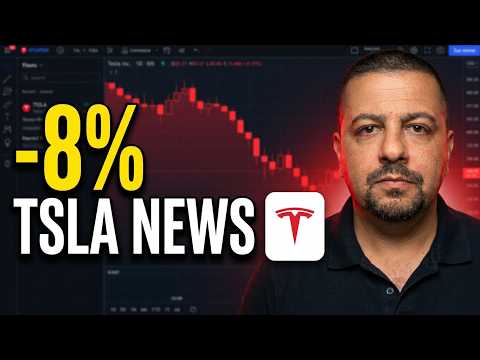
Tesla Shares Slide Despite Delivery Beat as Rivian Rally Shifts EV Investor Focus

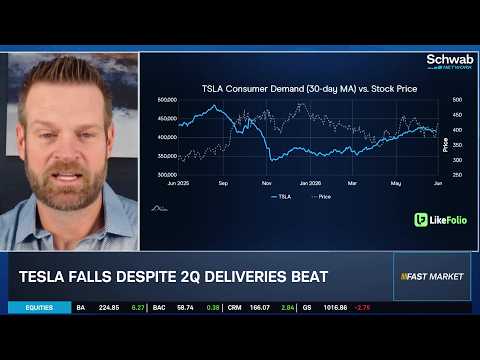
Tesla shares fell around 8% on Thursday even after the electric vehicle giant reported a much stronger-than-expected second-quarter delivery performance, while Rivian gained about 8% following its own delivery update and increased full-year guidance.

Tesla delivered 480,126 vehicles during the second quarter, up 25% year over year and well above Wall Street expectations of roughly 405,000 vehicles. The results marked the company’s strongest second quarter on record and its first annual delivery growth after two years of declining sales. The company also reduced inventory by delivering more vehicles than it produced, another positive signal for investors.

Despite those impressive figures, investors appeared to lock in profits after Tesla’s recent rally. Market participants also focused on the sustainability of the delivery rebound, with some questioning whether aggressive incentives and inventory drawdowns could pressure margins in upcoming earnings. The reaction reflected a classic “sell the news” move rather than disappointment with the headline delivery numbers.

Meanwhile, Rivian provided another positive surprise. The EV maker delivered 12,194 vehicles in the second quarter, beating both its own guidance and analyst expectations. More importantly, management raised its 2026 delivery forecast to 65,000–70,000 vehicles, citing strong demand for its R1 lineup and the early success of its new R2 SUV.

Rivian’s stronger outlook may also have contributed to Tesla’s weakness by reinforcing the view that competition in the U.S. EV market is intensifying. While Tesla remains the industry’s dominant player by volume, Rivian’s improving execution and confidence in future demand shifted some investor attention toward the smaller automaker’s growth story.

Investors will now turn their focus to upcoming quarterly earnings, where both companies will need to demonstrate that stronger deliveries can translate into healthy margins and sustained profitability.
Tesla Rises After Jefferies Raises Price Target

Tesla (NASDAQ: TSLA) gained 2.2% after Jefferies raised its price target on the electric vehicle maker to $375 from $350 while maintaining a Hold rating.

The higher target reflects improving confidence in Tesla's long-term growth opportunities, particularly in autonomous driving, robotics, artificial intelligence, and energy storage. While the analyst maintained a neutral stance, the increased valuation suggests Tesla's strategic initiatives are gaining greater recognition on Wall Street.

Investor sentiment has increasingly shifted beyond Tesla's traditional automotive business toward the company's AI-driven projects, including robotaxis, Full Self-Driving technology, and the Optimus humanoid robot program. These initiatives are viewed as potential long-term growth drivers that could diversify revenue beyond vehicle sales.

The stock's advance also comes as broader technology and AI-related shares continue to attract investor interest. Markets remain focused on companies with exposure to artificial intelligence and automation trends, areas where Tesla is making substantial investments.

Despite ongoing challenges in the global EV market, including increased competition and pricing pressure, investors appear encouraged by Tesla's ability to leverage its software, AI, and manufacturing capabilities across multiple industries.

Jefferies' higher price target suggests analysts see improving long-term value creation potential, even as near-term execution and demand trends remain key areas of focus. The stock's gain indicates investors welcomed the more optimistic outlook and continue to view Tesla as a major participant in the evolving AI and autonomous technology landscape.
Tesla Gains as HSBC Reiterates Hold Rating Amid Focus on AI and Autonomous Driving

Tesla (NASDAQ: TSLA) shares rose 1.2% on Monday as investors reacted to a fresh analyst update from HSBC, which reiterated its Hold rating on the electric vehicle maker.

The modest gain came despite the neutral stance from HSBC, suggesting investors remain focused on Tesla's longer-term growth opportunities in artificial intelligence, autonomous driving, and robotics rather than near-term vehicle delivery trends.

Tesla shares have experienced increased volatility in recent months as the company navigates slowing EV demand in some markets while accelerating investment in its Full Self-Driving platform, robotaxi ambitions, and Optimus humanoid robot program. Supporters argue these initiatives could unlock significant new revenue streams beyond traditional vehicle sales.

The reaffirmed Hold rating reflects a balanced view of Tesla's prospects, with analysts recognizing the company's technological leadership while remaining cautious about valuation and execution risks. With the stock gaining 1.2% despite the neutral recommendation, investors appear to be looking beyond current challenges and positioning for potential catalysts related to autonomous driving and AI-powered products.

Market attention is expected to remain focused on upcoming developments surrounding Tesla's robotaxi rollout, software progress, and broader AI strategy, which many investors view as key drivers of the company's future growth.
Tesla Falls 3.8% Despite Piper Sandler Reaffirming Overweight Rating

Tesla (NASDAQ: TSLA) shares declined 3.8% today despite receiving continued support from Piper Sandler, which reiterated its Overweight rating on the electric vehicle maker.

The stock's decline came amid broader weakness in growth and technology shares, as investors weighed interest-rate expectations and concerns about the near-term outlook for the automotive sector. Tesla has also faced increased scrutiny in recent months over vehicle demand trends, competitive pressures in key markets, and the pace of its transition toward autonomous driving and AI-related initiatives.

Despite these concerns, Piper Sandler's reaffirmed Overweight rating signals continued confidence in Tesla's long-term growth prospects. Many bullish analysts view Tesla as more than an automaker, pointing to opportunities in autonomous driving software, robotics, energy storage, and artificial intelligence as potential drivers of future value creation.

Investors remain focused on the company's upcoming product launches, progress in self-driving technology, and efforts to expand profitability following industry-wide pricing pressures over the past year. While vehicle sales growth has slowed compared with previous years, supporters argue that Tesla remains one of the best-positioned companies to benefit from the long-term electrification and automation trends reshaping transportation.

Today's decline appears to reflect broader market sentiment rather than a change in analyst views. The reaffirmed Overweight rating suggests that at least some Wall Street firms continue to see attractive long-term upside potential despite the stock's recent volatility.

As Tesla continues to balance automotive execution with ambitious AI and autonomous driving initiatives, investors are likely to remain highly sensitive to both macroeconomic developments and company-specific updates in the months ahead.
Tesla Holds Wall Street Support Despite Recent Pullback

Tesla (TSLA) shares slipped about 1%, but Wall Street remains optimistic about the electric vehicle giant's long-term prospects. TD Cowen reiterated its Buy rating on the stock and maintained a $490 price target, implying meaningful upside from the current share price near $418.

The reaffirmed rating suggests analysts continue to look beyond Tesla's near-term challenges, including slowing EV demand growth, increased competition, and ongoing concerns about vehicle deliveries. Instead, many investors remain focused on the company's long-term opportunities in autonomous driving, artificial intelligence, robotics, and energy storage.

Tesla's Full Self-Driving technology and planned robotaxi initiatives remain key parts of the bullish investment thesis. Supporters argue that Tesla is evolving from a traditional automaker into a broader AI and technology company, potentially opening new revenue streams beyond vehicle sales.

The maintained Buy rating also reflects confidence in Tesla's ability to leverage its scale, manufacturing expertise, and technological advantages to strengthen its competitive position over time. While the stock has experienced significant volatility in recent months, analysts continue to view Tesla as one of the most important companies in the EV and AI ecosystems.

Today's decline appears to be driven more by broader market weakness and profit-taking than by any significant change in Tesla's long-term outlook. The latest analyst reiteration indicates that Wall Street remains largely constructive on the company's future growth potential.
Tesla stock volatile as strong earnings overshadowed by weak outlook

Shares of Tesla, Inc. (TSLA) showed mixed and volatile performance this week, as solid earnings were offset by concerns over future growth and heavy investment plans.

The Tesla, Inc. reported first-quarter results that beat profit expectations but missed on revenue, highlighting ongoing pressure in its core automotive business. (Guardian)

Despite the earnings beat, investor sentiment turned cautious. Reuters reported that Tesla plans to significantly increase capital expenditures—exceeding $25 billion in 2026—as it accelerates investments in AI, robotics, and autonomous driving, raising concerns about near-term profitability. (Reuters)

Additional pressure came from weaker demand trends. Reports highlighted lower-than-expected vehicle deliveries and intensifying competition, particularly from Chinese manufacturers, as well as the impact of reduced EV incentives in key markets. ([Guardian][1])

At the same time, strategic developments added complexity to the outlook. Business Insider noted that Tesla is pursuing a potential $2 billion AI hardware acquisition, reinforcing its shift toward AI-driven growth beyond traditional automotive operations. (Business Insider)

Market reaction reflected these mixed signals. While the stock initially rose after earnings, it later declined and remained under pressure, with recent trading around the mid-$370 range and noticeable volatility. (Robinhood)

Overall, Tesla’s stock performance this week reflects a transition phase: strong current profitability is being overshadowed by concerns about slowing core demand and the risks associated with aggressive long-term investments in AI, robotics, and autonomous technologies.

Tesla Summon got insanely good in FSD v14.3.2 — Navigation? Not so much

Tesla Full Self-Driving v14.3.2 began rolling out to some owners earlier this week, and there are some notable improvements that came with this update.

(teslarati.com)

Tesla isn't joking about building Optimus at an industrial scale: Here we go

Tesla's Q1 2026 report confirms a 5.2 million square foot Optimus factory expansion at Gigafactory Texas, targeting 10 million robots per year, with Fremont's Model S and X lines converted to a 1 million unit pilot line. Public sales targeted for end of 2027 at $20,000 to $30,000.

(teslarati.com)

Tesla Q1 Earnings: What Elon Musk and Co. will answer during the call
Tesla is set to hold its Earnings Call for the first quarter of 2026 on Wednesday, and there are a lot of interesting things that are swirling around in terms of speculation from investors.

(teslarati.com)

Tesla expands Unsupervised Robotaxi service to two new cities
Tesla has taken a major step forward in its autonomous ride-hailing ambitions.

(teslarati.com)
Video Thumbnail
07-05-26WS News
Video Thumbnail
07-02-26WS News
Video Thumbnail
07-02-26WS News
Video Thumbnail
06-14-26Global Finance News
Video Thumbnail
06-14-26Global Finance News